
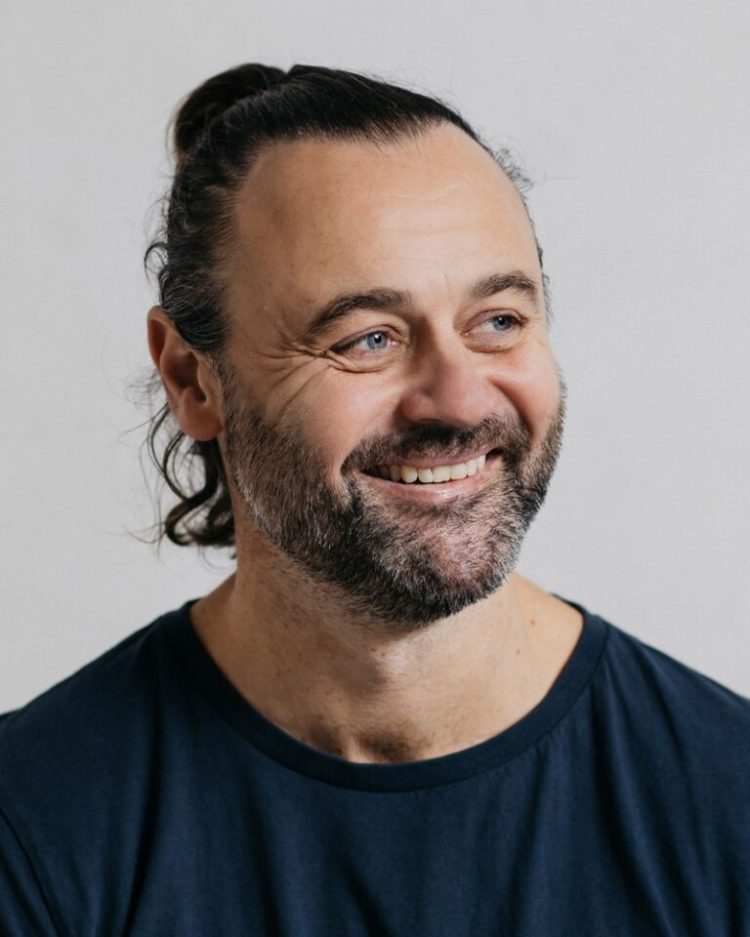
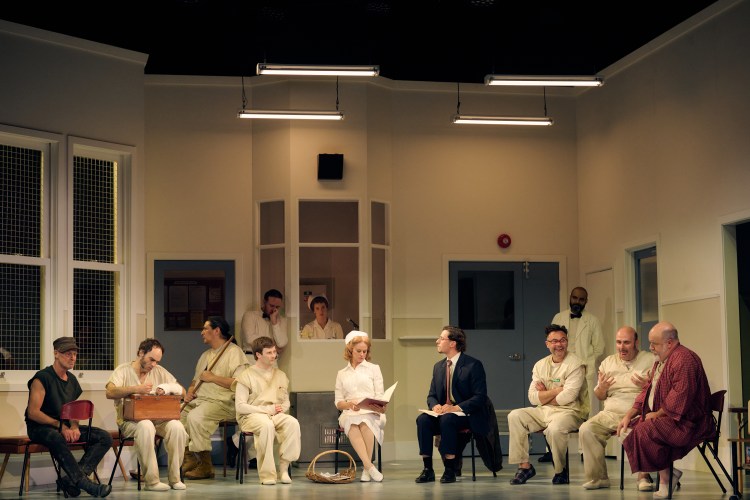
The Fame Reporter interviewed established Australian actor of stage and screen Gyton Grantley currently starring as the multi-faceted Cheswick in ‘One Flew Over The Cuckoo’s Nest‘ now playing at Melbourne’s Athenaeum Theatre One until 20 December.
Since graduating from QUT, Gyton has forged a remarkable career in film, theatre and television. In theatre Gyton performed as ‘Ron Weasley’ in the critically acclaimed Australian premiere of Harry Potter and the Cursed Child. He performed in the Vass Theatre Productions’ season of Hand to God simultaneously playing a boy and puppet to rave reviews and starred in Opera Australia’s production of South Pacific in the role of ‘Luther Bilis’.
His feature film credits include The Dressmaker, Don’t Tell, The Reef, Beneath Hill 60, Balibo, Prime Mover and The Nut Farm. He will soon be seen in the features Subversion and Runner. Gyton is renowned for his television performances and has appeared in House Husbands (Series 1-4) as series regular ‘Kane’, Fat Tony & Co, Cliffy, 30 Seconds, We Were Tomorrow, The Blake Mysteries: A New Beginning, Two Blue Lines, True Story with Hamish and Andy, Rescue Special Ops, East West 101, All Saints, Bond, Drunk History and Underbelly.
From television favourite to theatre star, Gyton Grantley has enjoyed an impressive career across stage and screen. Now starring as Cheswick in One Flew Over the Cuckoo’s Nest, we caught up with Gyton to chat about bringing the character to life, his career highlights and stepping into this iconic production.
You’re stepping into the role of Cheswick in One Flew Over the Cuckoo’s Nest, a character who brings plenty of personality, vulnerability and complexity to the story. What initially drew you to this role, and how have you approached bringing Cheswick to life?
I’ve always been drawn to characters who are a bit of a mess. Probably because there’s something wonderfully human about people desperately trying to hold themselves together while everything is falling apart.
Cheswick is one of those characters. He’s loud, impulsive, opinionated, occasionally hilarious, but underneath all that noise is a deeply frightened man who just wants someone to listen to him.
I’ve actually created quite an elaborate backstory for him. In my mind, he was an air traffic controller. A man whose entire profession revolved around maintaining control, until something catastrophic happened and his world collapsed. Whether the audience ever knows any of that is irrelevant. It’s what helps me understand why he behaves the way he does.
The challenge is finding the humanity beneath the behaviour. I don’t want to play a collection of symptoms. I want to play a man who’s lost his footing in the world and is desperately trying to find it again.
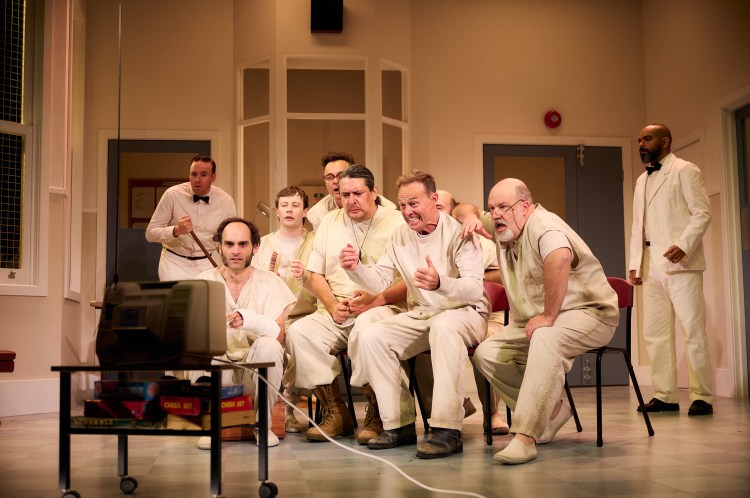
The play explores themes of individuality, authority, freedom and the power of standing up for yourself. What do you think makes these themes so relevant to audiences today, and what do you hope people take away from the production?
I think we’re living in a time when everyone’s got an opinion, everyone’s shouting to be heard, and yet somehow we’re not necessarily getting any better at listening to one another.
At its heart, this story asks a very simple question: what happens when someone takes away your ability to make your own choices? Perhaps more importantly, how much of ourselves are we prepared to surrender just to fit in?
What’s fascinating is that McMurphy isn’t necessarily setting out to be some great revolutionary. He’s just a bloke who doesn’t particularly like being told what to do and in doing so, he reminds these other men that they have a voice.
I hope audiences leave feeling entertained, challenged and perhaps a little more compassionate towards people whose struggles they don’t fully understand and maybe a little more willing to question authority. Within reason, of course. I don’t want to be responsible for a revolution in the Athenaeum Theatre foyer.
Cheswick has a particularly interesting place within the group of patients, with his own struggles and relationships within the institution. How have you approached developing his relationships with the other characters, particularly Randle McMurphy?
I think Cheswick sees something in McMurphy that he desperately wishes he possessed himself. Courage. Confidence. The ability to tell someone to get stuffed without spending the next three days worrying about the consequences. McMurphy becomes something of a hero to him.
Almost a big brother. He’s someone Cheswick can borrow courage from and that’s where the relationship becomes quite heartbreaking, because Cheswick begins to believe that if McMurphy can stand up to the establishment, perhaps he can too. But borrowed courage is a dangerous thing. Eventually you’ve got to find your own.
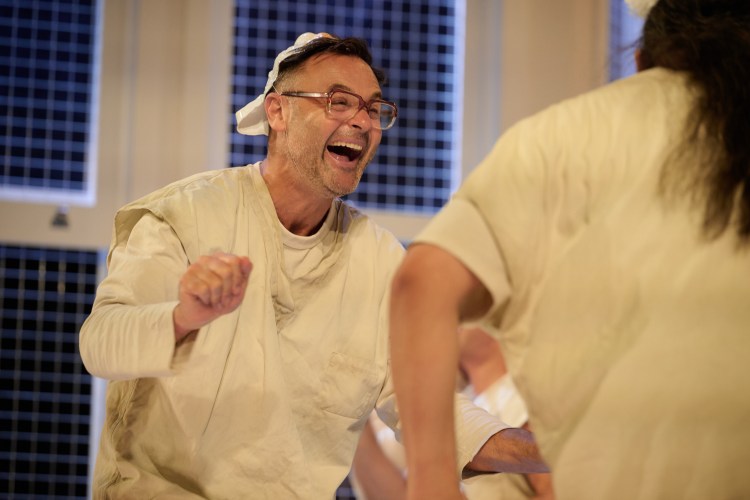
Working opposite Jason Donovan has been a real pleasure. There’s a wonderful energy to McMurphy, and I think the relationships between the men are what give the play its emotional weight. They bicker, they compete, they tease each other. They’re essentially a rather dysfunctional family. Which, come to think of it, isn’t terribly different from most families.
The story is perhaps best known through Ken Kesey’s novel and its iconic film adaptation. Did you revisit either before beginning rehearsals, or did you prefer to approach the stage production as its own interpretation?
The film is one of those extraordinary pieces of cinema that stays with you. Jack Nicholson is just magnificent. That grin alone deserves its own acting award. But there’s also a danger in being too influenced by something so iconic.
I wanted to give myself permission to discover Cheswick through the play rather than try to recreate somebody else’s interpretation.
The beauty of theatre is that the character only really comes alive when you’re in the rehearsal room with the other actors. You might arrive with a hundred ideas about who this person is, and then another actor looks at you in a particular way and suddenly ninety-nine of those ideas go out the window. That’s the magic of it and occasionally the terrifying part.
You’ve portrayed some wonderfully diverse characters throughout your theatre career, from Ron Weasley in Harry Potter and the Cursed Child to Luther Billis in South Pacific and the dual performance of a boy and puppet in Hand to God. How does Cheswick compare to some of these previous roles, and what has challenged you most about this production?
Well, Cheswick certainly has fewer magic tricks than Ron Weasley. Although I suspect he’d benefit enormously from a wand. I’ve been very fortunate to play some wonderfully eccentric characters.
Luther Billis was a glorious rascal, Ron Weasley has this beautiful combination of humour and heart, and Hand to God was an absolute circus of technical and emotional challenges.
What connects them all, though, is vulnerability. I think comedy is often at its best when it’s sitting right beside genuine pain. With Cheswick, the challenge is finding that balance. He’s frequently very funny, but he has absolutely no idea he’s being funny.
The moment you start playing for the laugh, you risk losing the truth of the character.
There’s also something quite exhausting about inhabiting a man whose emotional dial is permanently turned up to eleven. I’m hoping my family will forgive me if I come home and sit quietly in a dark room after the show.
Your career has spanned theatre, film and television, including your award-winning portrayal of Carl Williams in Underbelly. Does your approach to building a character differ between stage and screen, and what do you particularly love about returning to live theatre?
The foundations are exactly the same. You’re trying to understand another human being. What do they want? What are they afraid of? What are they hiding? The difference is really in the delivery.
On screen, the camera can pick up the tiniest flicker of thought. In theatre, you’ve got to communicate that same thought to someone sitting twenty rows away without making it look like you’re directing traffic at Tullamarine Airport.
What I absolutely adore about theatre is the danger of it. There’s no second take. No clever editing. No opportunity to say, “Sorry, can we go again? I think I had something in my teeth.”
You’re sharing this extraordinary, fleeting experience with hundreds of strangers, and no two performances are ever quite the same.
There’s something beautifully immediate about that. Theatre keeps you honest. And humble. Particularly when you forget a line.
You’ve also spent four seasons playing Kane in the television series House Husbands, a very different character and world to Cheswick. What are some of your favourite memories from your time on the show, and what did you enjoy most about being part of that ensemble?
House Husbands was such a joy because it celebrated the beautiful absurdity of ordinary family life. I loved being part of an ensemble where the relationships were every bit as important as the individual characters.
We spent four seasons building this little world together, and there’s a real sense of camaraderie that comes from that.
Some of my fondest memories are simply of the laughter between takes and the friendships that develop when you spend that much time together.
What I particularly loved was that the show found humour in the chaos of parenthood, while still treating its characters with enormous affection.
Now that I’ve got three children of my own, I look back on some of those storylines and think, “Oh, you poor naive fool. You had absolutely no idea what was coming.”
It was a wonderful job and a lovely reminder that you don’t need extraordinary circumstances to tell stories about extraordinary people.
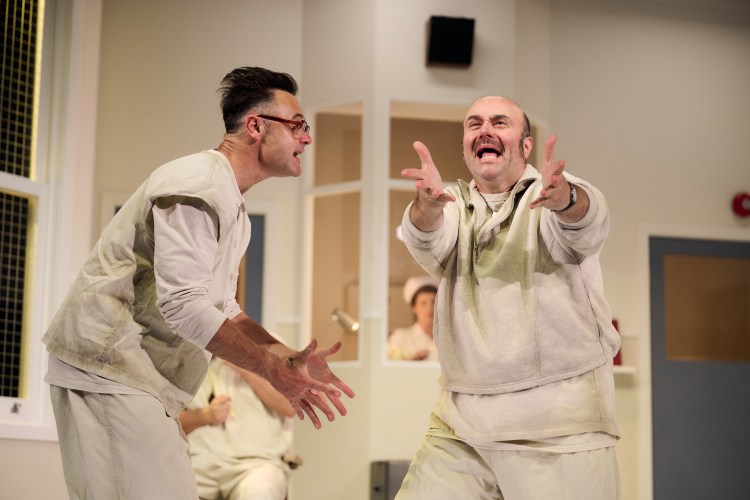
Having trained at QUT and built such an extensive career in the Australian entertainment industry, what are some of the lessons you’ve carried with you throughout your journey as an actor? Is there a particular production or performance that changed the way you approach your craft?
One of the greatest lessons I’ve learned is that acting isn’t about being interesting. It’s about being interested. Interested in the other person. Interested in what they’re saying. Interested in what’s actually happening in the moment. It sounds ridiculously simple, but it can take a lifetime to master.
When you’re younger, there’s a temptation to want to demonstrate how much acting you’re doing. As you get older, you realise that often the most powerful thing you can do is absolutely nothing. Just listen.
Every production has taught me something different. Underbelly taught me an enormous amount about specificity and finding the humanity in someone whose actions might be very difficult to comprehend.
Harry Potter taught me about precision, discipline and the extraordinary machinery involved in creating theatrical magic.
Becoming a father has probably taught me more about patience, listening and human behaviour than any acting class I’ve ever attended. Although my children remain the toughest critics I’ve ever worked with.
Theatre is such a collaborative art form, particularly with a production like One Flew Over the Cuckoo’s Nest, where the ensemble plays such an important role. What has the dynamic been like working with the cast, and are there any special moments from rehearsals that have stayed with you?
The wonderful thing about this play is that it simply doesn’t work unless everyone is genuinely invested in the world of the ward.
You can’t just turn up, deliver your lines and disappear into the background. Even when you’re not speaking, you’re still part of this strange little community.
We’ve got a terrific mix of actors, all bringing their own instincts, experiences and peculiarities into the room. Under Roger Hodgman’s direction, it’s been fascinating watching the relationships evolve. What I love most are those moments when something unexpectedly funny suddenly becomes terribly moving.
The laughter catches in your throat, and you’re reminded just how fragile these characters are. I think the best ensemble work happens when people stop worrying about their own performance and start looking after the story.
Naturally, the more serious the material, the more ridiculous actors tend to become during breaks. It’s an occupational hazard.
Away from the stage, you’re preparing to share another side of your life with the publication of your memoir, Il Dolce Fiasco, about moving your family to Italy. What inspired you to put that experience into a book, and has the adventure changed your perspective on life, family or even your approach to acting?
Well, it began with a fairly simple idea. Let’s pack up our lives, take three children under seven to Italy and spend eighteen months living the dream. What could possibly go wrong? As it turns out, quite a lot.
We moved to Sardinia with romantic visions of long lunches, beautiful beaches, wonderful food and a slower pace of life and we got all of those things. Just usually accompanied by screaming children, bureaucratic nightmares, lost possessions and the occasional complete emotional collapse. At some point I started writing it all down, partly because it was hilarious and partly because I needed evidence that it had actually happened. But I realised the story was about something much bigger than Italy.
It was about taking risks, being uncomfortable, surrendering control and discovering that the most extraordinary things in life often happen when your carefully constructed plans go completely pear-shaped.
It’s also a love letter to my wife, Alex, who somehow managed to hold the whole operation together while I wandered around pretending we were on a Fellini film set. Has it changed me as an actor? Absolutely.
I think it made me more curious, more empathetic and perhaps a little less frightened of the unknown and it reminded me that life is not something to be postponed until conditions are perfect. Sometimes you’ve just got to jump. Preferably into the Mediterranean.
Finally, for Melbourne audiences coming along to experience One Flew Over the Cuckoo’s Nest, what can they look forward to, and what would you say makes this production a must-see theatrical experience?
First and foremost, I think audiences are going to be surprised by how funny it is. People know the film, they know the subject matter, and they might arrive expecting two hours of relentless misery. But there’s so much joy, mischief and humanity in this story.
It’s about friendship, rebellion, dignity and the extraordinary lengths people will go to in order to feel seen and heard.
We’ve got a wonderful cast, led by Jason Donovan and Nadine Garner, and a story that has lost none of its power. What makes theatre so special is that for a couple of hours, a room full of strangers gets to experience something together.
We laugh at the same things, feel the same tension, and occasionally find ourselves deeply moved by someone else’s experience. In a world where we’re increasingly watching life through screens, that’s something pretty special.
Come for the laughs. Stay for the heartbreak. If you see Cheswick getting a little worked up, please don’t take it personally. He’s having a difficult day.
The Fame Reporter Quick-fire
Cheswick or McMurphy – if you could swap roles with anyone in the cast, who would it be?
Nurse Ratched. Just once I’d like to be the person with all the power. Although I suspect Nadine would make a terrifyingly good Cheswick.
A character you’ve played in the past that you’d love to revisit?
Ron Weasley. I miss the wand. And being part of that extraordinary magical world. Although I could probably do without the red hair.
Your ultimate dream theatre role?
King Lear. But perhaps in another twenty years. I’d like a little more life experience before I completely lose my marbles on stage.
Backstage ritual or pre-show tradition?
A little quiet time, some deep breathing and approximately seventeen unnecessary trips to the toilet.
If you had to describe Cheswick in three words, what would they be?
Loud. Loyal. Terrified.
Musical theatre or straight play?
A great story, with or without a tap number. Although I’ve always got a soft spot for a musical.
One song or artist currently on repeat?
I’ve actually been tinkering away with a punk song of my own. It’s on repeat mostly because I’m still trying to get it right. My family is thrilled.
If you could invite any three performers, past or present, to a dinner party, who would be on the guest list?
Peter Sellers, Robin Williams and Sophia Loren. I suspect I’d barely get a word in, which would be a refreshing change. I’d insist on doing the cooking.
What’s one thing audiences might be surprised to learn about you?
I’m an obsessive home cook. I can happily spend eight hours making something that my children will reject in approximately eight seconds.
Italy or Australia – where would you rather spend your next adventure?
Australia is home, but Italy has stolen a rather large piece of my heart. Can I have both? Six months here, six months there. Preferably with someone else paying for the flights.
Thank-you Gyton for joining us at The Fame Reporter and we wish you all the best for ‘One Flew Over the Cuckoo’s Nest’!
TICKETS
Playing until 20 December at
Athenaeum Theatre One, Melbourne
All photos – Supplied

