
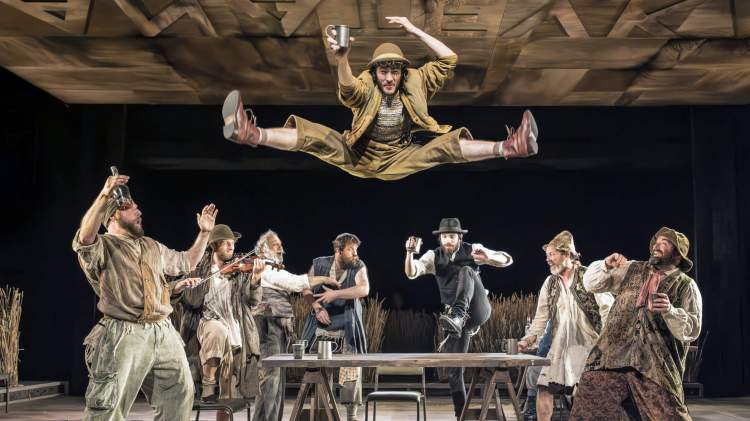
A powerhouse cast, ingenious staging and a timeless story make this Olivier Award-winning revival a theatrical triumph.
A standing ovation was the perfect ending to an unforgettable opening night of Fiddler on the Roof at QPAC’s Glasshouse Theatre. Bursting with extraordinary Australian talent, inventive staging and a timeless story that moves effortlessly between laugh-out-loud comedy and heartbreaking drama, this revival is a triumph of musical theatre.
Direct from London’s Regent’s Park Open Air Theatre, where it won the 2025 Olivier Award for Best Revival of a Musical, the production arrives in Brisbane with a powerhouse cast, beautiful live music, energetic choreography and ingenious floating set pieces. Yet, beneath the spectacle, it is the warmth, authenticity and humanity of its characters that make this production so memorable.
Set in the Jewish village of Anatevka in 1905, Fiddler on the Roof follows milkman Tevye as he navigates his five daughters’ changing expectations, the traditions that have shaped his life and the growing uncertainty threatening his community. Its exploration of family, faith, love and belonging remains remarkably relevant, particularly as generations struggle to reconcile the familiar with the desire for something different.
One of the production’s most refreshing choices is its naturalistic approach to performance, with the cast embracing their Australian accents. This makes conversations feel more lived-in and the characters more relatable, grounding the story in recognisable family dynamics without losing its historical setting.
The staging also creates an unusual intimacy, with characters sometimes seated in a circle of chairs around the stage, watching scenes unfold. This clever choice makes the audience feel as though we are sharing in the village’s private moments, reinforcing the sense that Anatevka is a community where everyone’s lives are interconnected.
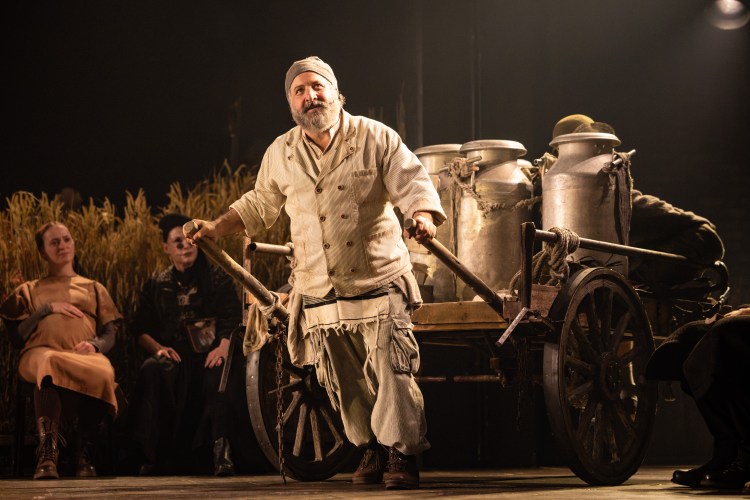
At the heart of the production is Troy Sussman as Tevye, delivering a commanding and wonderfully layered performance. He captures the milkman’s quick wit, stubborn pride and deep affection for his family, balancing hilarious observations with the vulnerability of a father watching the world he understands begin to change. Sussman gives Tevye genuine humanity, ensuring his struggles with tradition and his daughters’ independence feel personal rather than simply symbolic.
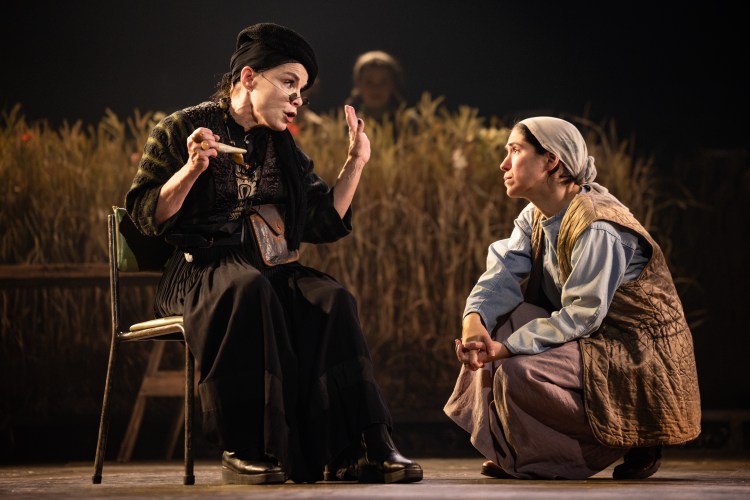
Alexis Fishman is equally compelling as Golde, bringing grounded strength and warmth to Tevye’s wife. Her chemistry with Sussman makes their exchanges a highlight, with the pair finding humour in the everyday frustrations of married life while revealing the enduring love beneath their bickering. Fishman gives Golde a strong presence of her own, making her far more than a supporting figure in Tevye’s story.
Sigrid Thornton makes a memorable impression as Yente, the village matchmaker. She brings personality and comic timing to a character whose matchmaking ambitions and village gossip help drive the story forward. Thornton embraces Yente’s meddling nature while making her feel like a familiar fixture in a close-knit community.
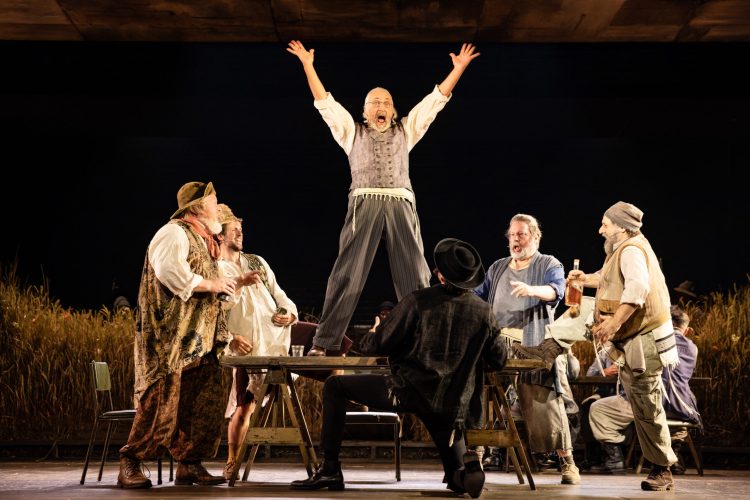
John Waters brings presence and authority to Lazar Wolf, the wealthy butcher whose proposed marriage to Tzeitel creates an early clash between parental expectations and romantic choice. His performance adds weight to the social dynamics of Anatevka, helping establish the world in which Tevye’s family lives.
The five daughters are central to the musical’s emotional journey, and each performer brings individuality to her respective story.
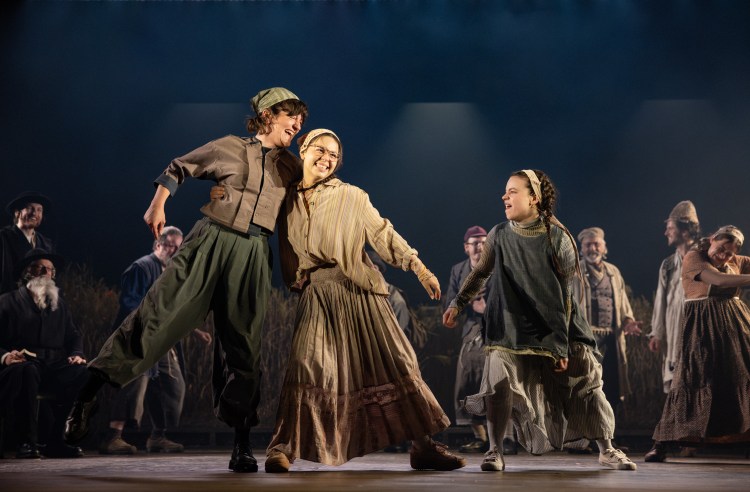
Freya Boltman plays Tzeitel, the eldest daughter determined to marry for love rather than accept the match arranged for her. Boltman gives Tzeitel a strong sense of conviction, making her determination to choose her own future both believable and endearing. Her storyline establishes the first significant challenge to Tevye’s traditions and sets the tone for the changes to come.
As Hodel, Ellen Ebbs brings warmth and spirit to a young woman whose romantic journey takes her beyond the familiar boundaries of Anatevka. Ebbs captures the tension between youthful idealism and the sacrifices that come with following your heart, giving Hodel’s story a poignant emotional pull.
Caity Plummer is a standout as Chava, whose love for Fyedka presents Tevye with one of his most confronting tests of faith and family loyalty. Plummer brings sensitivity to Chava’s determination to follow her heart, making the character’s desire to be understood particularly affecting. She also showcases her musical talents with beautiful clarinet playing, including a lovely duet with Ben Adler as The Fiddler. It is a special moment that adds another dimension to the production’s musical storytelling.
Romy Juliette Glass and Ksenia Teliatnikova complete the younger generation as Shprintze and Bielke. Their performances contribute to the warmth and bustle of the family home, reminding us that behind the musical’s larger conflicts are the everyday moments and sibling relationships that make this family feel real.
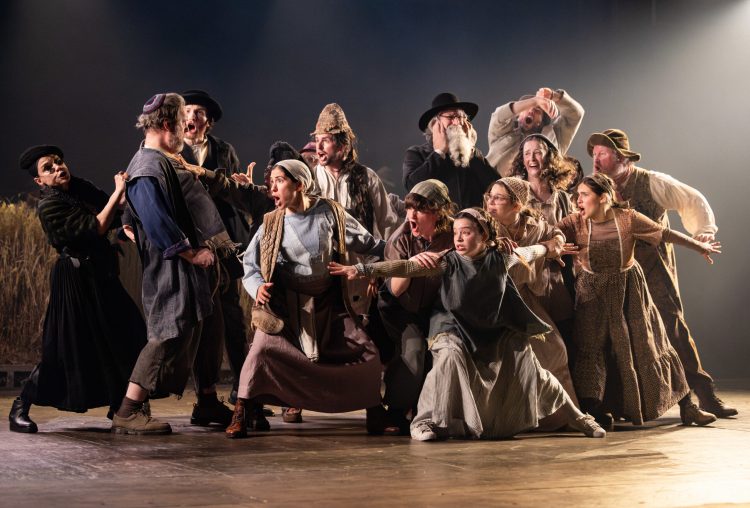
Maxwell Simon brings youthful conviction to Perchik, the progressive student whose ideals challenge the village’s established customs. His relationship with Hodel introduces a different vision of partnership, built on shared beliefs as well as romance, and Simon helps communicate the excitement of a generation beginning to question the rules it has inherited.
Felix Star is endearing as Motel, the humble tailor who hopes to marry Tzeitel. Motel’s nervousness and earnest determination provide some of the production’s lighter moments, while his journey towards standing up for himself gives the character a satisfying sense of growth. Star captures the appeal of an underdog whose courage emerges when it matters most.
Jacob Steen plays Fyedka, whose relationship with Chava creates one of the story’s most painful conflicts. Steen contributes to the emotional complexity of a storyline that challenges the boundaries between love, faith and family acceptance.
Danielle Barnes appears as Shandel, while Nina Carmen takes on Rifka and Mirila, helping populate the village with characters who contribute to its lively social fabric.
Andrew Dunne brings Mordcha to life, Damien Bermingham plays Avram, Mark Doggett appears as the Rabbi, and Rubin Matters plays Mendel. Together, these performers help establish the familiar rhythms of village life, from everyday conversations and community rituals to the uncertainty that gradually unsettles Anatevka.
Alex Mulcahy takes on the dual roles of Yussel and Nachum, adding further character and colour to the village, while Nick Brown plays the Constable. As the outside world increasingly intrudes on the community, the Constable becomes part of the tension underpinning the story’s more serious moments.
Anthony Sheppard plays Sasha and also serves as Dance Captain, contributing to the production’s ensemble movement and choreography. Curtis Kossart and Patrick Whitbread appear as Russian 1 and Russian 2, helping bring the production’s more confrontational scenes to life.
The company is supported by Samantha Stewart and Hanlon Innocent as Swings, while Christopher Tendai serves as Resident Choreographer and Swing. Daniel Lopez performs as The Fiddler Alternate, complementing Ben Adler’s principal performance.
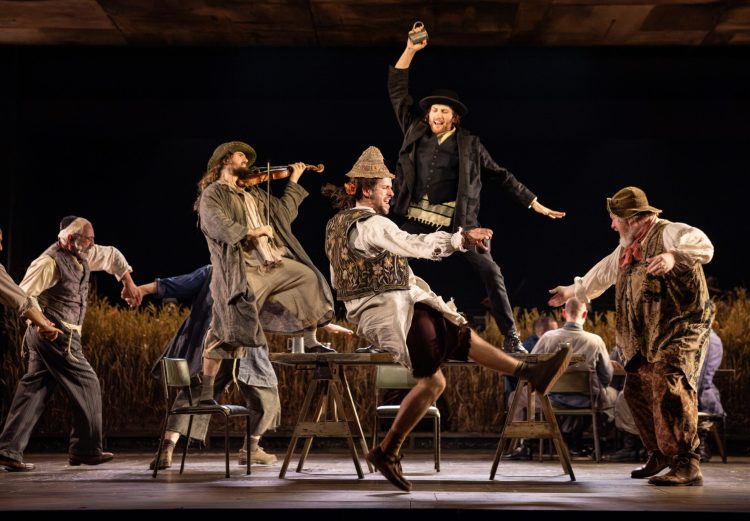
Across the company, the ensemble work is essential to the production’s success. Each performer contributes to the sense of a community with shared traditions, relationships and history, making the eventual disruption of that world all the more affecting.
Ben Adler’s performance as The Fiddler provides one of the production’s most distinctive visual and musical threads. Representing the precarious balance at the centre of the story, Adler’s presence reinforces the idea that even the strongest traditions can become difficult to sustain when the world around us changes. His musical connection with Plummer’s Chava in their clarinet duet adds a particularly beautiful touch.
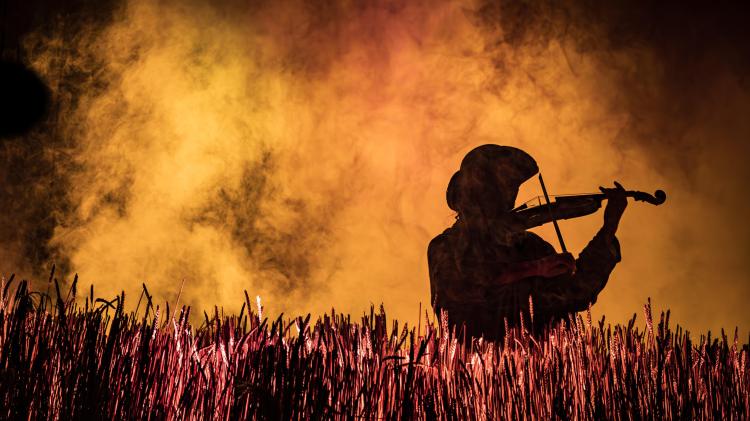
The score remains one of the musical’s greatest strengths, moving between exuberant celebration and aching reflection. Familiar songs such as “Tradition”, “If I Were a Rich Man”, “Matchmaker” and “Sunrise, Sunset” carry the story’s emotional weight, while the musicians provide a rich foundation for the cast’s performances.
The choreography is another highlight, particularly the iconic bottle-balancing dance. Watching performers balance bottles on their hats while executing intricate footwork and dropping to their knees is a remarkable display of precision, coordination and control. The sequence brings infectious energy to the stage, combining traditional movement with impressive physical skill and earning its place among the production’s most memorable crowd-pleasing moments.
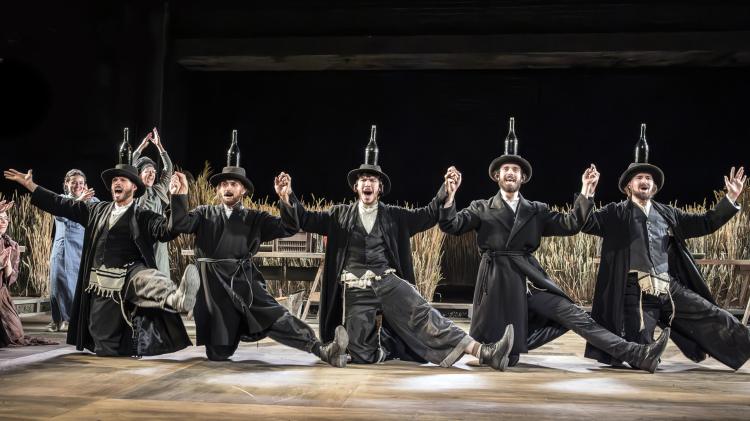
Visually, the production is a triumph of theatrical craftsmanship. Floating set pieces create a dynamic stage picture, allowing the world of Anatevka to shift around the characters without losing its intimacy. Thoughtfully incorporated props and practical details make the village feel inhabited, while the staging balances grand theatrical moments with quieter scenes that bring us closer to the people at the centre of the story.
The production’s greatest strength is its ability to move between comedy and heartbreak without losing its balance. The humour feels natural, the family interactions are wonderfully recognisable, and the serious moments land with genuine force because the audience has been invited to invest in these characters.
This revival demonstrates why Fiddler on the Roof continues to resonate across generations. Its story explores what happens when the world changes faster than our beliefs can keep up, and how love, family and community can be tested when the familiar begins to disappear.
The exceptional Australian cast, beautiful music, inventive floating set pieces and intimate staging combine to create a production that feels both grand in scale and deeply personal. The natural Australian accents further ground the story, allowing the humour to land effortlessly and the emotional moments to feel authentic.
Having earned international acclaim with its 2025 Olivier Award, this production arrives in Brisbane with a formidable reputation — and delivers a memorable night of theatre.
The standing ovation at the Glasshouse Theatre was a fitting response to a revival that celebrates the enduring power of tradition while reminding us that sometimes, finding our balance means learning to embrace change.
A beautifully staged, emotionally rich revival filled with extraordinary Australian talent, inventive theatricality and a timeless story that will leave audiences laughing, reflecting and reaching for their loved ones with something to talk about.
TICKETS
Now playing at Glasshouse Theatre, QPAC until 25 October.
All images supplied.

