
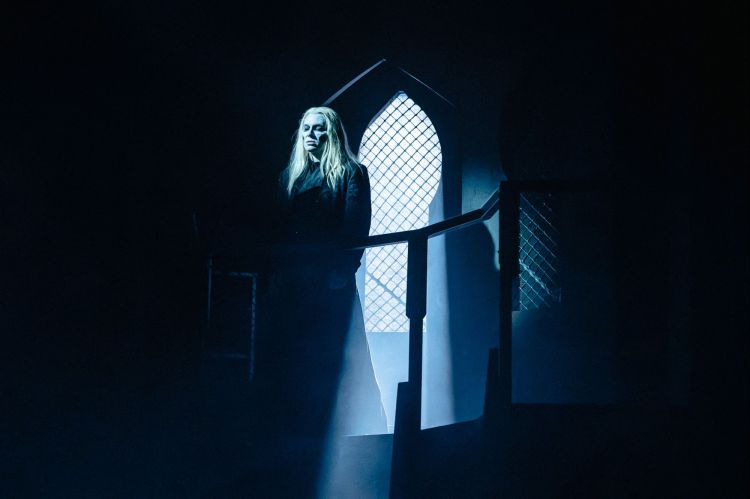
There will be blood, plenty of jump scares and some seriously impressive stagecraft as Shake & Stir Theatre Co’s Dracula sinks its teeth into Brisbane audiences at QPAC’s Playhouse Theatre.
Returning to Brisbane a decade after its original success, Shake & Stir Theatre Co’s adaptation of Bram Stoker’s gothic classic proves that sometimes the most terrifying stories are best experienced live. Combining outstanding performances, inventive staging and spine-chilling technical effects, Dracula is an exhilarating theatrical experience that keeps audiences on the edge of their seats from beginning to end.
From the moment the story begins, there is an unmistakable sense of unease. The production wastes no time immersing audiences in its dark, atmospheric world, where danger lurks around every corner and nobody is quite safe. With its impressive ensemble and clever use of theatrical illusion, this is a production that demonstrates just how powerful live theatre can be.
A cast that brings the darkness to life
At the centre of the production is Nick Skubij as Count Dracula, delivering a commanding and deeply unsettling performance as the infamous vampire. Skubij captures the character’s sinister charm, making Dracula as captivating as he is terrifying. His physicality is particularly impressive, with sharp, predatory movements and sudden, aggressive attacks that make his appearances genuinely frightening. There is an extraordinary confidence to his performance, and his ability to shift between an eerily controlled presence and explosive bursts of violence keeps audiences guessing.
Ryan Hodson as Jonathan Harker provides a compelling entry point into this frightening world. As the young solicitor who finds himself trapped in Dracula’s castle, Hodson convincingly portrays Jonathan’s growing fear and desperation. His performance gives the audience someone to invest in as the story descends further into darkness, while his reactions to the increasingly disturbing events help build the suspense.
Nicholas Hope takes on the dual roles of Professor Van Helsing and Renfield, demonstrating impressive versatility in two very different characters. As Renfield, his unsettling physicality and erratic behaviour bring an unpredictable energy to the production, while his portrayal of Van Helsing offers a determined counterpoint to the vampire’s evil. The contrast between the characters is striking, and Hope navigates both with a commanding stage presence.
Loren Hunter as Mina brings warmth, intelligence and emotional depth to the story. As the woman whose life becomes increasingly entangled with Dracula’s sinister plans, Hunter balances vulnerability with determination. Her performance provides an emotional anchor amid the supernatural chaos, ensuring Mina remains much more than a passive victim of the unfolding horror.
Jessica Vickers as Lucy delivers another standout performance, particularly as her character’s circumstances take an increasingly disturbing turn. Vickers effectively captures Lucy’s transformation, shifting between moments of vulnerability and something far more sinister. Her physical performance is particularly striking, adding to the production’s unsettling atmosphere and making her character’s journey one of its most memorable elements.
Rounding out the cast, Nick James as Dr Jack Seward brings a grounded and compelling presence to the production. As a doctor drawn into the increasingly inexplicable events surrounding the vampire, James conveys the tension between rational thinking and the horrifying reality unfolding before him. His performance adds another layer to the story, helping to maintain its emotional stakes as the danger escalates.
Together, the six performers create an exceptional ensemble. Every actor contributes to the production’s atmosphere, with convincing accents, expressive physicality and committed performances that make the characters and their world feel authentic.
The chemistry between the cast members, combined with their precision in the more physically demanding sequences, is a testament to the skill required to bring this gothic nightmare to life on stage.
Inventive staging that makes horror feel real.
One of the production’s greatest strengths is its inventive use of staging. The set is more than a backdrop; it becomes an active part of the storytelling, transforming the space into an ominous world where the audience never quite knows what might happen next.
The moving staircase is a particularly impressive feature, creating shifting perspectives and allowing scenes to transition seamlessly between locations. Combined with the stage turntable, it produces an extraordinary effect during Dracula’s movements, making the vampire appear to travel at an unnatural speed. The result is both visually ingenious and genuinely unsettling, reinforcing the sense that Dracula operates by a different set of rules to the humans around him.
The physical sequences are equally impressive. The vampire’s sudden appearances, rapid movements, airborne attacks and aggressive lunges create moments of real theatrical spectacle. These sequences demand remarkable coordination and precision, and the performers execute them with an intensity that makes the supernatural elements feel startlingly believable.
The use of props and practical effects also deserves recognition. The blood is an essential part of the production’s gruesome aesthetic, with carefully timed effects adding a visceral quality to the violence. Rather than relying solely on suggestion, the production embraces the darker, bloodier aspects of the story, making the horror immediate and confronting.
Lighting and sound build a world of suspense
The lighting design is another major highlight, working hand in hand with the set and performances to create a deeply atmospheric experience. Shadows, sudden changes in illumination and dramatic blackouts heighten the tension, while carefully timed lighting effects make the vampire’s appearances even more alarming.
The production understands the importance of restraint when building suspense. Moments of darkness and stillness allow the anticipation to grow before the next shock arrives, making the jump scares all the more effective. The result is a constant sense of uncertainty, with audiences never entirely comfortable in their seats.
Sound and music further intensify the experience, adding to the gothic atmosphere and amplifying the impact of the action. Every technical element feels carefully considered, creating a cohesive production in which lighting, sound, movement and staging work together rather than competing for attention.
A thrilling reminder of what live theatre can do.
Adapted by Shake & Stir’s Nelle Lee and Nick Skubij and directed by Michael Futcher, Dracula demonstrates the company’s flair for transforming classic literature into bold, accessible and visually inventive theatre.
What makes this production so effective is its commitment to every element of the experience. The performances are compelling, the physical theatre is impressive, and the technical design continually finds new ways to surprise and unsettle.
There is also an understanding that horror works best when audiences are emotionally invested in the characters, giving the frightening moments greater weight.
For theatre lovers who enjoy something a little darker, this is a production that delivers on its promise. It is inventive without losing sight of the story, frightening without relying entirely on shock, and filled with performances that make the most of every moment on stage.
Shake & Stir Theatre Co’s Dracula is a blood-curdling triumph of ensemble performance and theatrical ingenuity. With its moving staircase, ingenious turntable effects, striking lighting and committed cast, this is gothic horror brought vividly to life.
Whether you are a fan of Bram Stoker’s classic tale or simply looking for a theatrical experience that will leave you gripping your seat, Dracula is well worth sinking your teeth into. Just be prepared for a few frights along the way.
TICKETS
Now playing at Playhouse Theatre, QPAC until 8 November.
All images supplied.

