
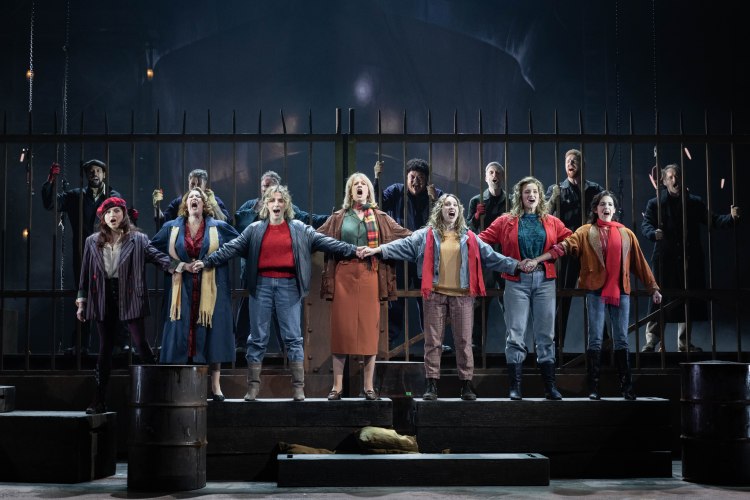
Sting’s The Last Ship arrives in Brisbane as a deeply personal and richly textured piece of music theatre, fusing folk storytelling with sweeping theatricality. Set against the decline of a shipbuilding town, the musical leans heavily into themes of legacy, identity, and reconciliation, with Sting’s score acting as both narrative driver and emotional compass. Songs like “The Last Ship”, “Shipyard”, and “When We Dance” ebb and flow like the tide itself—at times rousing and communal, at others hauntingly intimate. Notably, this production also marks a milestone moment as the first musical to open at the brand-new Glasshouse Theatre at Queensland Performing Arts Centre, adding an extra layer of occasion to an already special staging.
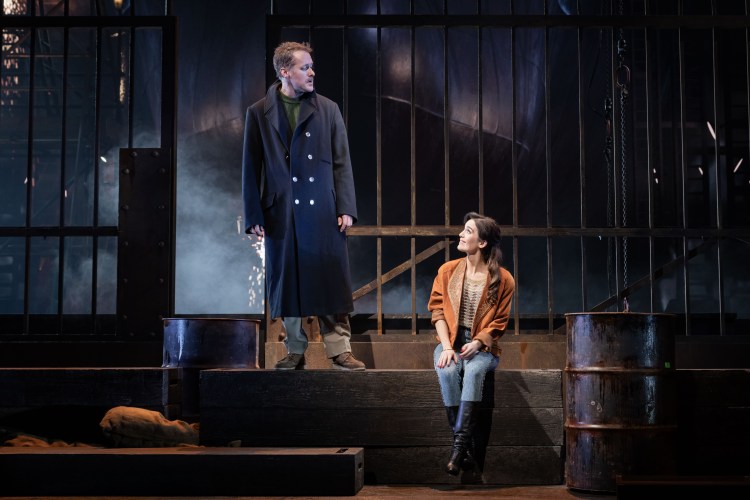
At the centre is Declan Bennett as Gideon Fletcher, whose return home anchors the story. Bennett charts Gideon’s journey—from restless dreamer to a man confronting the consequences of leaving—with layered vulnerability. His renditions of “All This Time” and “Ghost Story” are delivered with aching sincerity, giving real emotional weight to Gideon’s fractured relationships. Opposite him, Lauren Samuels’s Meg is no passive love interest; she is fiercely independent, and Samuels imbues her with both grit and longing. Her powerhouse vocals soar capturing Meg’s resilience, particularly as a single Mother, and her unresolved heartbreak.
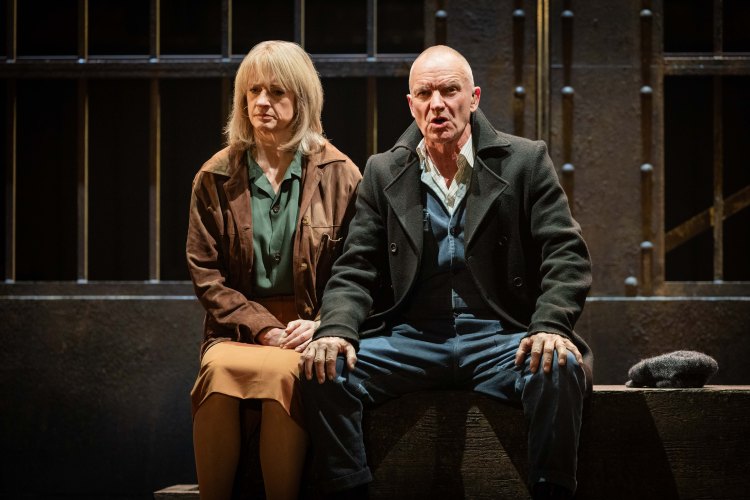
Sting as Jackie White brings a grounded, lived-in quality to the patriarch of the shipyard. His performance feels steeped in memory, particularly in quieter musical moments where his voice carries the weight of a lifetime spent at sea. Alongside him, Annette McLaughlin’s Peggy White is the emotional backbone of the family—her performance in “August Winds” is both tender and devastating, reflecting a woman caught between loyalty and loss.
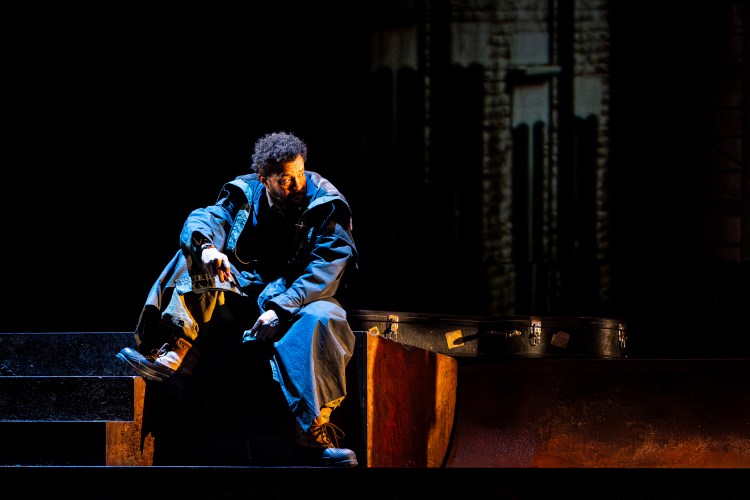
A fascinating and inventive layer comes from incredible Reggae artist Shaggy as the Foreman, who is reimagined here as something far more symbolic than a traditional authority figure. Rather than simply overseeing the shipyard, Shaggy’s Foreman takes on an almost spectral presence—moving through scenes like a quiet observer, a guide, even a grim reaper of sorts. He shadows Gideon as unresolved grief over his father’s death lingers, and hovers near Jackie as his health declines and mortality becomes unavoidable. It’s a subtle but powerful directorial choice, and Shaggy leans into it with a calm, knowing stillness that contrasts beautifully with the emotional turbulence around him, adding an eerie sense of inevitability and closure to the narrative.
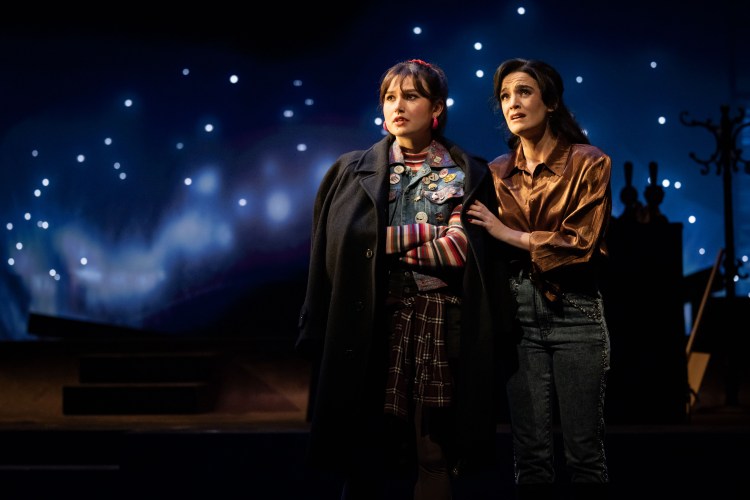
A true standout of this Brisbane production is Hannah Richardson as Ellen. Her portrayal is both vocally stunning and emotionally shattering, particularly as Ellen grapples with the revelation of her father’s identity. Richardson navigates this arc with remarkable control—her voice delicate and searching in the early moments, before swelling into raw, powerful emotion as the truth unfolds. Her performance becomes one of the production’s most affecting threads, grounding the broader story in something deeply personal and human.
Joe Caffrey’s Billy Thompson brings warmth and humour, acting as both narrator and conscience of the community, while Marc Akinfolarin’s Davey provides a welcome contrast—fun-loving and full of life, yet layered with emotional depth that surfaces in the show’s more poignant moments. Cassiopeia Berkeley-Agyepong makes a striking impression as Baroness Tynedale, adding a touch of sharp authority and presence that cuts through the working-class world of the shipyard. Mathew Craig’s Freddy Newlands is another standout, bringing a boldness and passion to his role whilst his character is not well-liked, while Lemuel Knights as Adrian injects humour and grounded warmth, offering moments of levity that feel entirely earned within the fabric of the story.
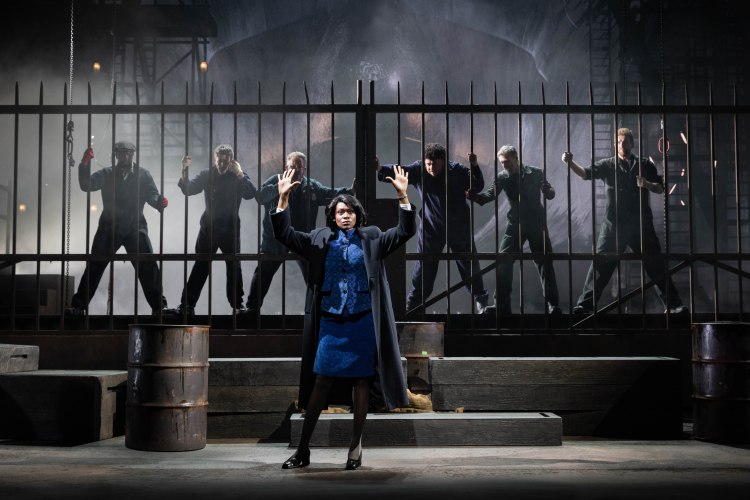
The wider company—including Matt Beveridge, Matthew Gent, Llandyll Gove, Lou Henry, Helen Hill, Grant Neal, Gabriella Stylianou, Emma Thornett, and Kevin Yates—functions as a true ensemble in every sense. They are not just background players but the living, breathing soul of the town, their harmonies in numbers like “Shipyard” and “The Last Ship” creating a powerful sense of unity and shared struggle. Another highlight is when the women in the cast make a barricade when trying to protect the shipyard. It is such a strong image of the power of community and in particular, women and what can be accomplished as they come together. Beautiful and powerful to witness.
Visually, the production is striking. The set design is both inventive and fluid, transforming seamlessly from shipyard to home to open sea. A standout feature is the digital screen work at the rear of the stage, which brings the ship itself to life—waves rolling, steel structures rising, and the vessel slowly taking shape before our eyes. These projections are not mere decoration; they actively enhance the storytelling, immersing the audience in the scale and movement of the shipbuilding world and adding a cinematic quality to the stagecraft.
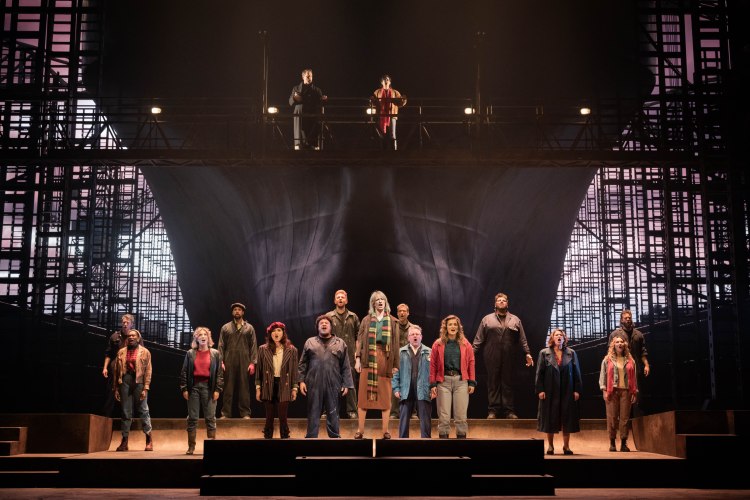
Ultimately, The Last Ship in Brisbane is a production that marries intimate storytelling with grand theatrical vision. With a cast that delivers both vocally and emotionally, and a design that pushes the boundaries of stagecraft, it’s a moving tribute to community, heritage, and the ties that pull us home. At its core, it’s the essence of real human stories that resonates most; this isn’t a flashy fantasy musical, but an honest, emotive reflection of real people facing real struggles—something audiences can deeply connect with long after the final note.
TICKETS
Now Playing at the Glasshouse Theatre, QPAC Until 3 May
All images supplied.
 The Fame Reporter