
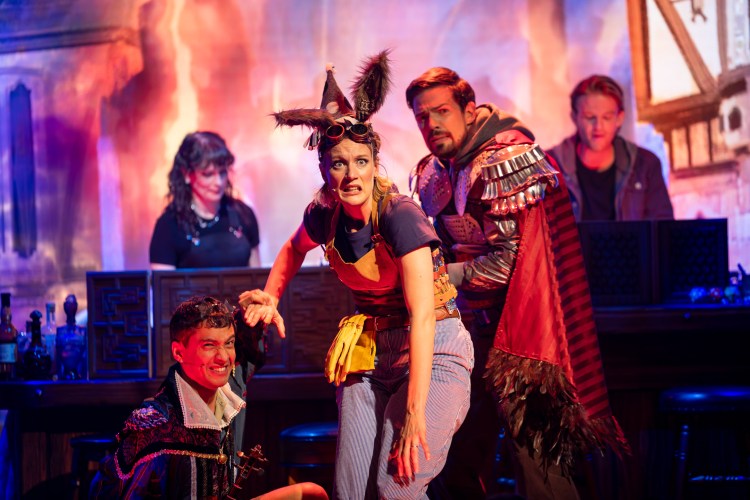
The Fame Reporter interviewed super Swing, Davey Seagle, starring in the global phenomenon direct from New York to the Sydney Opera House is Dungeons & Dragons, The Twenty-Sided Tavern. The show is playing at the Studio, Sydney Opera House until 8 March.
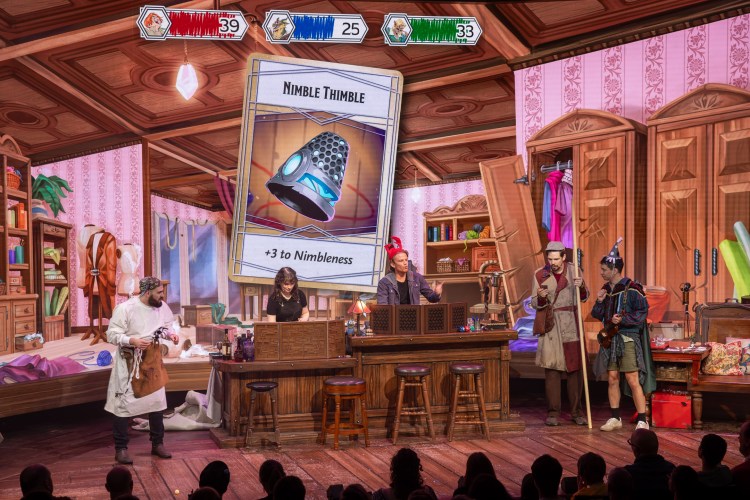
This is your chance to experience the global phenomenon that is Dungeons & Dragons. Funny, smart and surprising, the magic from everyone’s favourite role-playing game comes to life in the first ever officially authorised Dungeons & Dragons show. Your Dungeon Master will be leading the charge as you influence the story’s direction with real-time choices and interactions on your phone creating a hilarious adventure.
This award winning show is for everyone: from the die-hard gamer to those who have only heard about Dungeons & Dragons.
We talked to Davey about the importance of being a swing, the rehearsal process behind an improvisation show, working at the Sydney Opera House and more.

Welcome to The Fame Reporter Davey, for those who may be unfamiliar with DUNGEONS & DRAGONS: The Twenty-Sided Tavern, can you give us a brief overview of what the show is about? What can audiences expect in terms of both the experience and the performances?Thanks for having me! The show is basically an epic fantasy adventure but where all the key moments, the success or failure of the heroes, and the fate of the story itself are left entirely to the whims of the audience or the roll of a dice.
I have never in my life seen another show where people leap out of their seats and scream with excitement like I’ve seen at this one.
We don’t know how any particular show will end, and we don’t even know which characters we’ll be playing at the start of each night, it’s improvised and funny, there are a ton of unexpected twists and turns, and depending on the show it can be the best kind of silly time or an epic drama, and it usually turns into both.
The audience plays along with us by taking part in challenges on their phones and voting on choices, and the adventure unfolds from there!

As a swing in DUNGEONS & DRAGONS: The Twenty-Sided Tavern, you play multiple characters. Can you describe what it’s like to prepare for such a varied role?
It’s had its challenges! I have 9 unique characters I play, and which one I’ll end up with on any given night is always a surprise. It can be nerve-wracking.
The whole cast has put a ton of work into becoming deeply familiar with the incredibly complicated machinery of the show itself, so no matter what wildly variable shenanigans occur we can keep everything going smoothly.
On the bright side, since it’s an improvised show there aren’t a lot of lines to learn! In terms of preparing the characters themselves, we inherited their basic descriptions from the Off-Broadway production of the show, but how we play them has been left entirely to us.
Our wonderful director gave us free rein to make them our own or even to change them up between shows.
So for me, it’s been largely a trial-and-error process of putting my spin on them and finding what I find the most fun in each.
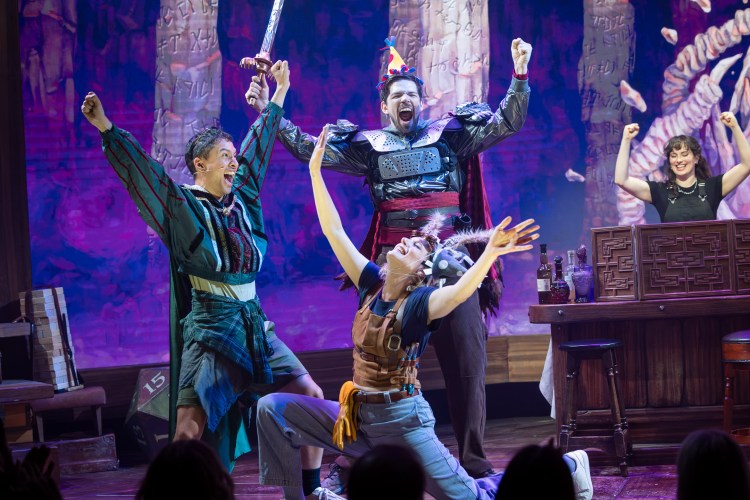
The role of a swing is often less visible but extremely crucial to the success of a show. How do you approach this responsibility, and what strategies do you use to ensure you’re always ready to step into any character on short notice?
It’s my first time as a swing, and it’s been a fun challenge! There are so many little things to keep on top of which change depending on the track I’m covering.
Whether I’m performing or not, each show day, I run through each of my characters, their accents, voices, and how they move till I feel like they’re sitting under my skin and easy to call on. I basically pace around my living room, talking to myself like a crazy person a lot.
It’s about trying to be a reliable support to the rest of the cast, on stage and off, and while backstage, it becomes a game of staying vigilant and tracking the improv as it happens so if I’m needed I could step in seamlessly if needed.
In immersive and interactive performances like The Twenty-Sided Tavern, audience engagement is key. How do you adapt your performances based on the audience’s reactions, especially when playing multiple characters in such a dynamic setting?
For me, it’s all about trying to switch off my brain and just surrendering myself to the show! The audience lets you know what they’re enjoying, you can feel it in the room. As much as I can, I try to give myself over to the improv gods and hope for the best.
At the back of my mind, there’s the chess game of narrative set-ups, show logistics and D&D game mechanics, but if the audience responds to a sentimental moment, or is enjoying some character conflict, or if a particular character journey takes on a particular importance, we’ll lean into it and see where it takes us!
Since it’s always a different combination of characters, it’s always a different audience. We just try to let the show inform us moment to moment what it wants to be.
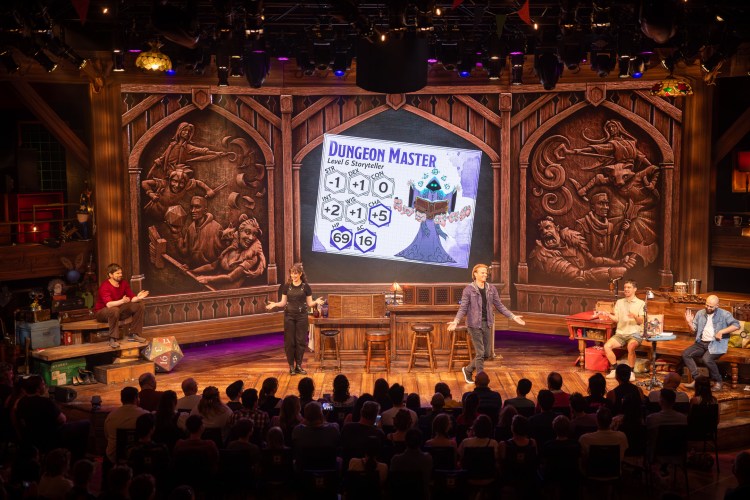
The Sydney Opera House is an iconic venue. How excited are you to be performing there, and what does it mean to you to be part of such a unique and renowned space for a show like DUNGEONS & DRAGONS: The Twenty-Sided Tavern?
Oh, it’s crazy surreal and an absolute dream. I’ve been avidly following and nerding out about the New York production of The Twenty-Sided Tavern since it was first announced!
The show sits at the cross-section of my passions for theatre, role-play gaming, and immersive experience, and I’m obsessed.
Plus, it’s at the Opera House. I immigrated to Sydney when I was a child and I’ve never lost the awed “I can’t believe I actually live here now!” feeling I have when I see the Opera House. Now I get that every day and I work there?!
Playing D&D? D&D at the Opera House?! And I’m in the show!? I pinch myself every time I think about it.
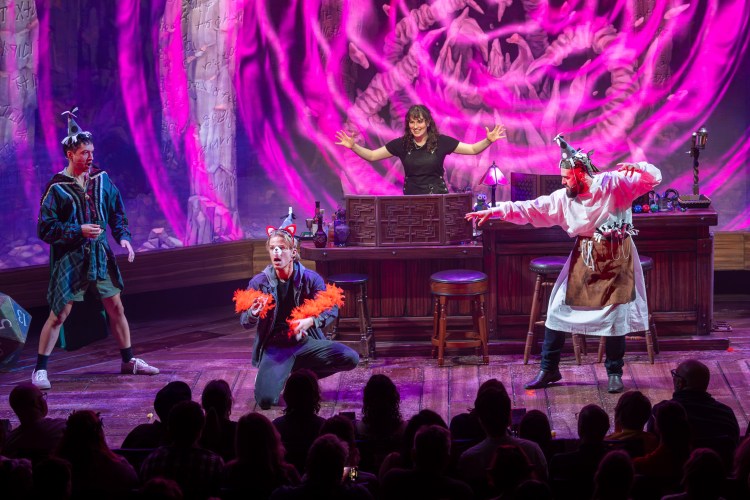
Your background includes significant work in immersive experiences like TattleTales and Hotel Bella Luna. How has your experience in these interactive formats influenced your approach to swinging in a show like DUNGEONS & DRAGONS: The Twenty-Sided Tavern?
There’s a huge overlap! Looking back it almost feels like I’ve been accidentally training to be in TST for the last decade. Tattletales, in particular, which is a show I’ve now performed over 200 times, has been hugely influential on how I’ve approached TST.
Tattletales is an interactive storytelling show where I improvise the stories with an audience using Tarot cards. I actually created it partly inspired by D&D and my desire to bring the electric excitement of role-play gaming into a theatrical context.
Now, while it and my other immersive work have focused far more on more intimate experiences, I use exactly the same story-building, audience awareness, and reactive playfulness that I learnt in making that other work.
What’s the most challenging part of being a swing in a show that involves improvisation and audience participation, such as The Twenty-Sided Tavern? How do you stay grounded while embracing the unpredictability of live theatre?
For me, the most challenging part about being a swing so far is just not having the same momentum as one would have performing every day. There’s a lot you gain from that rhythm, and generating that momentum for myself is something I’m still perfecting.
Having said that, the show still has the feeling of a normal game of D&D, despite all the bells and whistles and it’s a game I’ve loved for years.
It helps to just sink back into that feeling of playing a fun game with friends. With an audience, it’s just more friends than usual!
With your experience in games like DUNGEONS & DRAGONS as a game master, do you find that role-playing games have helped you in your theatre work, especially in portraying a wide range of characters in an immersive setting?
Definitely. I’ve been a Dungeon Master for over a decade and have been doing it professionally for a couple of years now. For the uninitiated, a game master is the narrator of a game who guides the rest of the players through the world of the adventure. It involves playing every character in the world which aren’t the main adventuring characters.
In an average game, you end up jumping from voicing a player’s mother to becoming their love interest, to being a demon lord, a local merchant, or a random frog the players decide to talk to, a talking sword, and half a dozen others.
You want to make each character engaging, and distinct. There are a lot of ways to do that, and you don’t need to be an actor to do it, but wow it has made for incredible acting and improv practice!
I increasingly think of all my acting, even in traditional dramatic or Shakespearean productions, like I’m just role-playing. It helps get me out of my head and be more alive in my characters. I love it.
You’ve been involved in some award-winning productions with Ponydog Productions. How does the collaborative, ensemble nature of those projects compare to working as a swing in a large production like The Twenty-Sided Tavern?
In some ways, it’s very similar; in others, it’s pretty different! I must say though, the process of both has been incredibly collaborative, and the cast of the Twenty-Sided Tavern is also as tight and as talented an ensemble as anyone could wish for, swings included.
We rehearsed together and equally, and as swings, we perform with the main cast a lot. I think the biggest difference is that in TST, we know we’re just a small part of something much, much bigger, whereas, in intimate indie theatre, it’s far more reliant on everyone’s individual passion, dedication, and grit to make the show happen.
There’s something really special about that, but it comes with far more challenges. At TST, we can just focus on the show and don’t also have to worry about selling the tickets!
As someone with a deep passion for storytelling and character creation, what has been your most memorable experience in DUNGEONS & DRAGONS: The Twenty-Sided Tavern so far? Have there been any particularly surprising or fun moments?
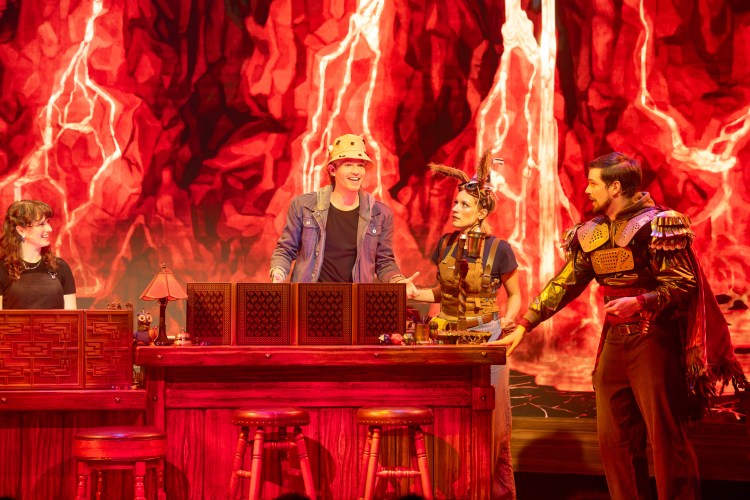
There are wonderfully beautiful surprises in every show! The dice have an uncanny ability to roll the most dramatic results possible, and personally, I do love it when things go horrifically wrong for my characters. It’s just far more juicy.
Possibly my favourite so far was a show where I ended up attempting to become a dictator as a maniacal but deeply insecure goblin, and in trying to impress the other characters with how evil I was I got embroiled in love triangle, betrayed my love interest, but then was killed by them.
It was like a very silly Game of Thrones. Surprising and fun moments galore! And it’s like that for every show.
TICKETS
The Studio, Sydney Opera House
Until 8 March
The Fame Reporter Social Media
YouTube
Instagram
Twitter
Facebook
All photos – Supplied
 The Fame Reporter